
Running a Sex Offender Check in Dawson County
The Texas Public Sex Offender Registry is the main public channel for Dawson County. Texas DPS manages the database, and the search is free. It supports name, city, ZIP, county, map, and advanced approaches. Dawson County does not publish a separate county registry list, local map, alert app, or online registration schedule. That makes the state registry the best first stop, but not the last word when a current address or compliance question needs confirmation.
Start with facts you already know. A full legal name, alias, city, ZIP, or street area can reduce false matches. Open the full profile and compare several fields. One matching name is not enough. For a Dawson County address, note the registering agency and the date or status shown. Then call the right local office if the result seems stale, a person cannot be found, or immediate local facts matter. Registry data is a public-safety tool, not a finding about a new crime.
Dawson County Sex Offender Registration
Registration responsibility depends on where the person lives. A registrant inside Lamesa reports to the Lamesa Police Department. A registrant in rural Dawson County reports to the Dawson County Sheriff. The research found no posted Dawson County registration calendar, walk-in schedule, separate unit address, or dedicated local registry line. Call before visiting so staff can give the right location and appointment instructions.
Lamesa Police is at 601 S. 1st Street in Lamesa and can be reached at 806-872-2121. The Police Secretary’s number is 806-872-4368. The Dawson County Sheriff lists 806-872-7560 and P.O. Box 1268, Lamesa, TX 79331-1268. These offices handle registration duties. Texas DPS publishes the public record. A local office can address a possible compliance issue, but it may direct a general searcher back to the state portal for public profile details.
Note: Confirm the reporting office before a visit because Dawson County does not post a separate registration schedule online.
Searching the Texas Public Sex Offender Registry
Use the Texas DPS portal to search Dawson County records. The live form timed out during the research capture, so exact required flags and radius choices should be read from the current screen. Do not assume an empty result means no duty exists. Spelling, aliases, address changes, geographic filters, and the timing of agency updates can affect a match.
- Open the official Texas registry and review its conditions of use before entering search terms.
- Choose a name or place approach. Use a city, ZIP, Dawson County filter, address, or map control when the live form offers it.
- Review the result list. Compare names, aliases, photographs, physical traits, and geography before selecting a profile.
- Read the full profile, including the registering agency, risk level, offense details, and verification status. Contact that agency when current compliance must be confirmed.
| Search approach | Input type | Required status | Use |
|---|---|---|---|
| Name | Text | Check live form | Search a known legal name or alias |
| Address or city | Text | Check live form | Focus on Lamesa or another known place |
| ZIP | Text | Check live form | Narrow results to a postal area |
| County | Selection | Check live form | Filter results to Dawson County |
| Map or advanced search | Map and controls | Check live form | Review an area using the options currently offered |
The official DPS search screen shows the state interface used for Dawson County registry checks.
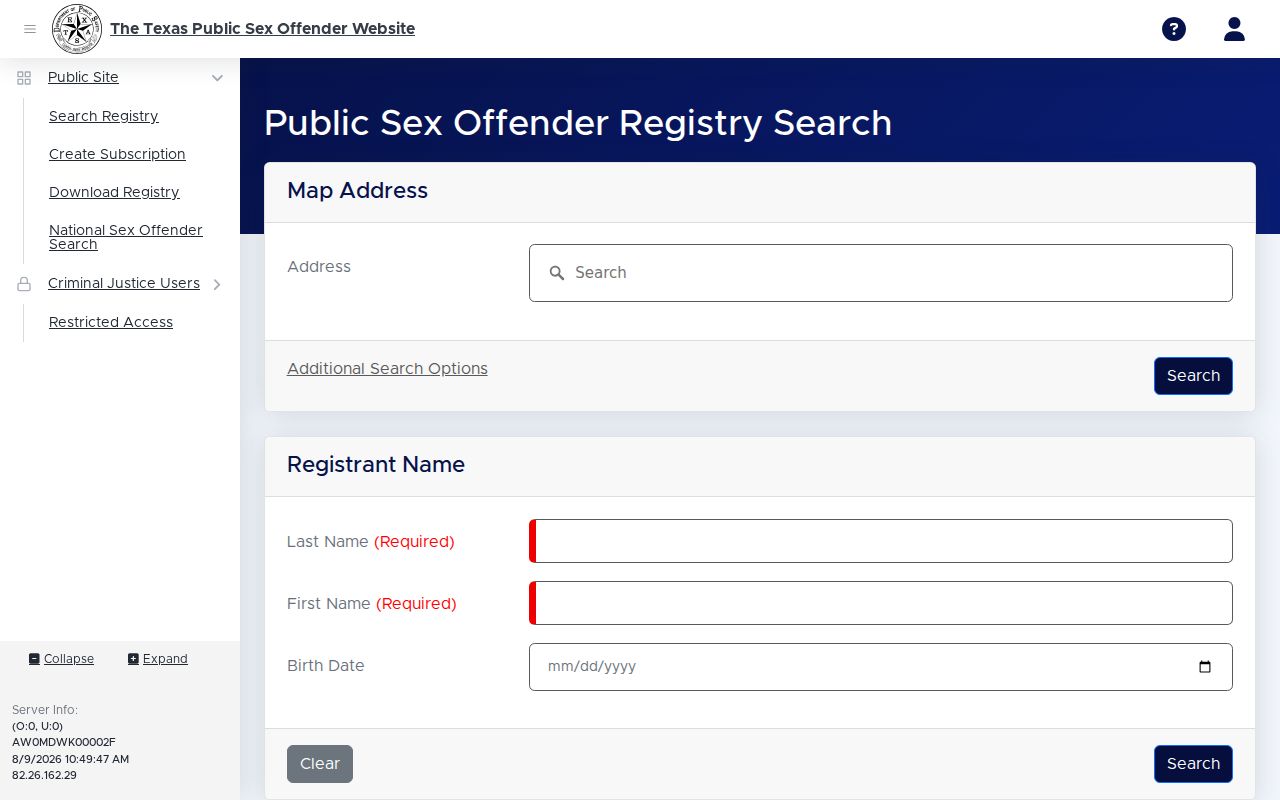
This neutral view helps identify the official state channel without displaying or singling out a private registrant.
Dawson County Registry Address Duties
Texas law sets a short timetable for moves. A person with a duty to register must report an intended move in person no later than seven days before leaving the current residence. After arriving at a new Texas address, the person must register with the new local authority no later than seven days after arrival. In Dawson County, the destination agency is Lamesa Police for a city resident or the sheriff for a rural resident.
Verification continues after the first registration. A civilly committed sexually violent predator verifies every 30 days. A person with two or more sexually violent offenses verifies every 90 days. Other registrants generally verify once each year. These intervals describe check-in duties, not how often every public webpage changes. If a Dawson County profile shows an old address or a concerning status, give the registering agency the exact profile details and location. Call 911 only for an immediate threat.
What a Registry Profile Shows
A Texas public profile gives enough detail to distinguish records and understand the registration basis. Read the entire Dawson County profile rather than stopping at the photo or address. The offense label, conviction date, punishment, victim age category, supervision or release details, risk assessment, and agency status provide context that a map pin cannot. Some vehicle information, schools, scars, marks, or tattoos may also appear when the law permits publication.
| Name & Aliases | Legal name and published alternate names used to distinguish the record |
|---|---|
| Photo & Description | Photograph, age or date of birth, sex, race, height, weight, hair, and eyes |
| Address & Geography | Published residence or location information and the relevant registering agency |
| Offense & Statute | Offense, statute, conviction date, punishment, and published victim age category |
| Risk Information | Texas risk level and any exposed civil-commitment status |
| Registration Status | Agency, verification or compliance information, and supervision or release details when public |
| Other Identifiers | School, marks, scars, tattoos, and limited qualifying vehicle information when exposed |
Note: A registry profile documents a legal registration duty; it does not report every event in a person’s court history.
Dawson County Registry Profile Redactions
Public access has firm limits. Code of Criminal Procedure Section 62.005 divides public registry fields from protected data. The public Dawson County view does not expose a Social Security number, driver license number, personal telephone numbers, online identifiers, employer contact details, victim identity, or court-protected juvenile information. A field missing from the public profile may therefore reflect a legal restriction rather than an incomplete search.
The official Chapter 62 text explains why the public Dawson County profile is a defined set of fields rather than an unrestricted personal file.
Registration Requirements and Levels in Texas
Texas risk levels describe assessed danger and the chance of continued conduct. They are not the federal SORNA tiers, and they do not set the registration term. Duration follows the qualifying offense and statutory category. Adult registration lasts for life for categories in Section 62.101(a). Other adult duties generally run until the tenth anniversary after the latest of discharge or dismissal, release, or the end of supervision. Juvenile duties generally run ten years after disposition or completion, whichever is later.
| Texas classification | Meaning | Duration and verification |
|---|---|---|
| Level 1, low | Low danger and not likely to continue | Duration follows offense statute; generally annual verification unless another rule applies |
| Level 2, moderate | Moderate danger and may continue | Duration follows offense statute; generally annual verification unless another rule applies |
| Level 3, high | Serious danger and likely to continue | Duration follows offense statute; frequency can change with offense history |
| Civil commitment | Civilly committed sexually violent predator | Underlying duty controls duration; verification every 30 days |
The Texas DPS registration program page gives the official program overview used for Dawson County.
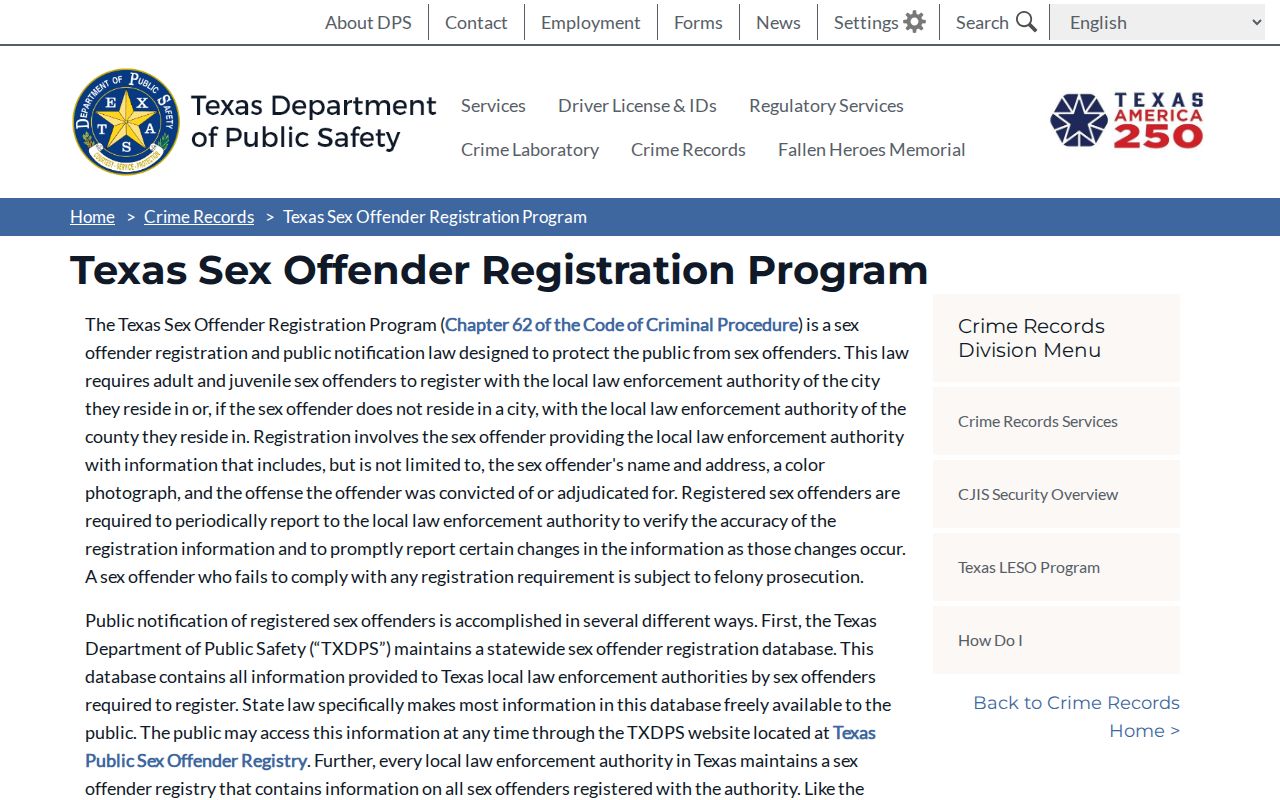
The state guidance places risk, duration, verification, and public notice within one Texas statutory program.
Dawson County Registry and NSOPW
The National Sex Offender Public Website adds a cross-state layer. It is useful when an address, trip, or known person may involve more than Texas. Name and ZIP mode requires a first and last name together or a ZIP. It can filter by county, city, as many as five ZIP codes, all jurisdictions, states and territories, or participating tribes. Radius mode requires an address, city, state, and distance.
NSOPW does not replace the Texas record. Only jurisdictions that supply coordinates take part in radius results, and each state remains responsible for its underlying data. For a result tied to Dawson County, follow the link back to the Texas DPS profile and read the state fields there. If local confirmation is needed, use the Lamesa Police or sheriff channel based on the residence.
The federal search interface shows how a Dawson County query can be extended beyond Texas.
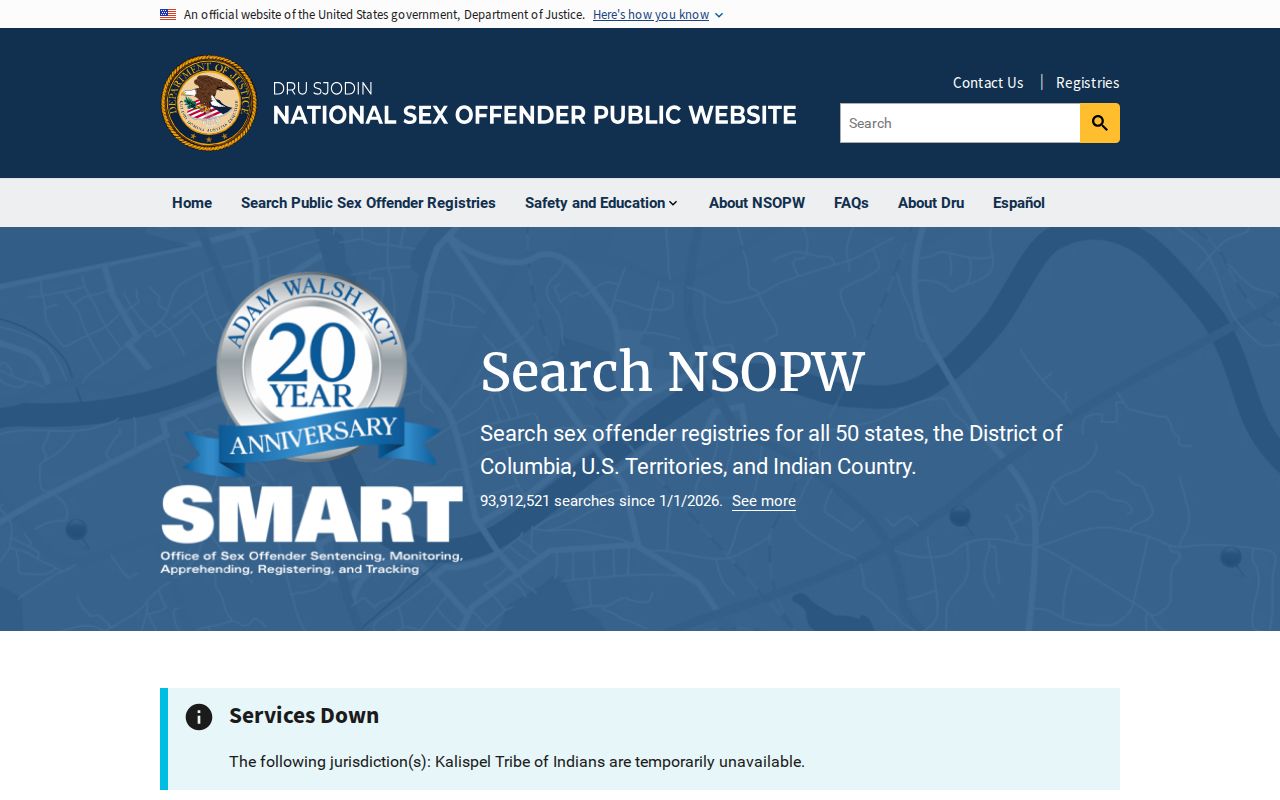
The national layer is most useful as a bridge to participating jurisdiction records, not as a substitute for local follow-up.
No Dawson County Registry Distance Rule
Chapter 62 does not impose one blanket statewide residence-distance rule for every registrant. Texas cities may create zones under Local Government Code Section 341.906, and terms of supervision can add person-specific limits. The research did not verify a Dawson County-wide distance ordinance. Do not draw a boundary around a school, park, or day care and present it as local law without checking the current city code, county action, and any court or supervision order.
This distinction matters for map users. A profile marker shows published geography. It does not announce whether a separate local ordinance applies, whether a supervision condition exists, or whether an address has been approved. Direct questions about a specific restriction to the registering agency or the court and supervision office with authority over that person. The public registry remains an awareness tool, not a zoning ruling.
Lawful Use and Community Notification
Texas may use bilingual postcards when a high-risk registrant moves into or is released into an area, and agencies notify schools when the law requires it. Public registry searches add another way for Dawson County residents to plan for family and community safety. Use the data to learn, verify an address through official channels, and make calm safety choices. Never approach a person on the list. Suspected noncompliance should be reported to Lamesa Police, the Dawson County Sheriff, or Texas DPS at 512-424-2800. Call 911 for immediate danger.
Do not confront or harass: Failure to comply with registration duties is a felony under Code of Criminal Procedure Section 62.102. Report suspected violations to law enforcement; never threaten, intimidate, or misuse registry information.
A missing Dawson County result does not clear a person, and a listed profile does not license private punishment. Give officials the name, address, profile link, and facts that caused concern. Let the registering agency compare those facts with protected compliance records and decide the lawful next step.